
OUR FOCUS AREAS
We research dozens of topics, regions, case studies and organizations. We summarize that information to inform, to inspire and to provide you with information which is current, impactful and which you may not find in main stream media outlets. We update this page periodically. Visit us often.
The War System

"War is organized murder, and nothing else", Harry Patch, surviving soldier of WWI.
The War System is a complex and deeply integrated, interdependent network of institutions and human behaviors reliant on legacy beliefs that war is inevitable and war is just. The profit motive feeds the War System starting from pre-war, war itself through postwar spoils and its expansion is based on people's economic dependance on its institutions and cultural acceptance that military actions are not accountable to societal norms or laws. The War System is omnipresent locally and globally, is present on land, sea, and orbitally, celebrated in game and song, and taught to each of us from infancy through adulthood.
Elements of the War System
Pre-War: The Growth of Military Bases
Pre-War: The Growth of Military Bases
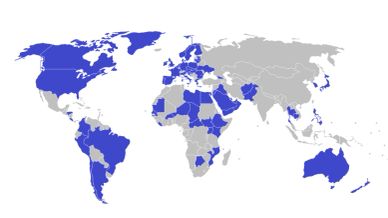
Post WWII, the US military established installations in over 3,000 locations worldwide designed for "containing" threats, maintaining "dominance" through a massive, strategic presence, and providing troops to support the UN peacebuilding teams and rescue operations. As of today, there are approximately 900 US military bases worldwide and about 400 bases operated by other nations. The CATO Institute , World Beyond War military analysts, and the International Peace Bureau argue for closing military bases, Under President Biden, bases started to close under the BRAC process. Under President Trump a massive alignment of military presence has occurred at the US Southern border and overseas bases are proposed for either expansion or relocation.
War
Pre-War: The Growth of Military Bases

During war oil depots (top photo) are considered strategic areas for initial targets. In the top photo, an oil depot was targeted during the Russia-Ukraine war weakening access to fuel but also releasing pollutants into the land, waterways and emissions into the air. In the 2nd photo, also in the Russia-Ukraine war, an entire forest and nature preserve were destroyed
Postwar: Never Ending Wars
Wars do not end with the last bomb. The countries experiencing war see environmental degradation, famine, poverty, and health impacts for decades. In the top photo, the burning of the Kuwaiti oil fields was and still is a massive act of environmental warfare executed by Iraqi forces in 1991. In the bottom photo, Vietnam's environment still has not recovered from the defoliants used and children's health issues persist such as a high prevalence of congenital disabilities. The war ended in 1975.
Example Military Base -- GUAM
Mass Migration Refugee Camps

Guam is a western Pacific island which has been a U.S. territory since 1898, acquired from Spain during the Spanish-American War. The island is inhabited by the indigenous Chamorro people for over 4,000 years. Guam has been used as a strategic U.S. military base from 1898–1941 and continuously from 1944 to the present. The primary bases are Naval Base Guam in Santa Rita (south) and Andersen Air Force Base in Yigo (north). A newer installation, Marine Corps Base Camp Blaz, is located in Dededo and under constructions is a new arms test range. The harms perpetrated by the US military on native populations, their spaces, and the island's environment are well-documented and military expansion is increasing that harm. Refer to Stay Informed for the most recent case before SCOTUS.
Electronic Warfare
Mass Migration Refugee Camps
Mass Migration Refugee Camps
The War System takes a systemic approach to the many components of war including its enablers, its contractors, its impacts and one of the more hidden components - data centers. Data centers, autonomous weaponry, artificial intelligence (AI), and the military ("war system") are rapidly converging, creating a new era of "algorithmic warfare" where physical infrastructure—specifically high-power computing centers—serves as the backbone of national security, defense, and power projection. Currently, the US military operates about 3,000 data centers. They research areas such as edge computing tools in combat, autonomous weapons, logistics, environmental impacts, resource challenges and public protests.
Mass Migration Refugee Camps
Mass Migration Refugee Camps
Mass Migration Refugee Camps
The UN estimates that one person every second is displaced due to forced migration as a result of conflict, violence, persecution, human rights violations, and climate-related disasters. At the end of 2024, an estimated 123.2 million people worldwide were forcibly displaced. Many were relocated in one of hundreds of refugee camps around the world. Refugee camps are designed for the short term, but situations can result in people living in camps for years or even decades.
Wars Increasing in Frequency & Lethality
DOD Hunting Human Traffickers
Wars Increasing in Frequency & Lethality
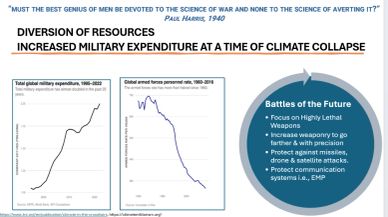
The world is experiencing wars at a frequency not seen in decades. The lethality and precision of weaponry has increased the number of civilian deaths including women and children, aid workers and peacekeeping forces. And vulnerable populations are facing genocide and mass atrocities including ethnic cleansing, war crimes, and crimes against humanity. The attacks on infrastructure providing water, fuel and power - necessities for survival, are under attack and based on the Geneva Convention amount to war crimes.
Autonomous Military Weapons
DOD Hunting Human Traffickers
Wars Increasing in Frequency & Lethality
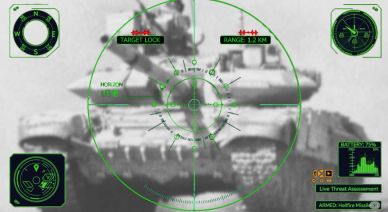
AI in warfare has been around for more than a decade, but its application in the war system is accelerating. And the Ukraine-Russian war is providing the data that will feed into autonomous systems to train AI models. The Ukraine-Russian war has provided more than 2 million hours of data, equivalent to more than 228 years of battlefield footage. From this data, the model is trained on “combat tactics, spotting targets and assessing the effectiveness of weapons systems.”
DOD Hunting Human Traffickers
DOD Hunting Human Traffickers
DOD Hunting Human Traffickers
This heat map of human trafficking activity across the world is one of the tools that is part of DARPA's Memex program, designed to help law enforcement officers and others do investigations online and hunt down human traffickers. The platform has recently expanded to include a spectrum of threats in addition to human trafficking. At U.S. Southern Command, the DARPA program called Memex started (2015) by developing a way to understand linkages among websites, initially to help fight sex trafficking.
Systemic Colonialism

Systemic colonialism is an institutionalized structure where a colonial or corporate power imposes its political, economic and cultural systems over a region and its inhabitants. It can benefit through financial imperialism and acts through institutionalized violence, land theft, and racialized fear, natural resource extraction (mining, deforestation, oil drilling), ecosystem destruction and pollution, and a framework that privileges the colonizer's society. Honduras is our first example of systemic colonialism.
Modern Day Colonizers
Honduran Colonialism Part I
Photo credit: Latin American Working Group. Modern-day colonialism in Honduras serves as an example of "corporate colonialism," and financial imperialism which are discussed in this section and the two adjacent sections. The intent is to illustrate how colonialism continues to permeate societies where foreign entities, supported by international finance, exploit land and resources, and displace Indigenous communities. In the case of Honduras (gained independence in 1821), foreign entities were allowed to create "model cities" (ZEDEs) under former President Hernandez (2014 - 2022) bypassing local laws. When Hernandez was in power these foreign entities established Próspera, a feudal-like "startup city" on the island of Roatán.
Honduras: Reforms Part 2
Following a democratic election, the new President Castro (2022 - 2026) assumed office at a time drug activity resulted in high crime and Honduras was considered the most dangerous country in the world. She set out reforms which reduced poverty and crime, increased social safety nets, and repealed the ZEDEs law. The Honduran Supreme Court determined that the ZEDEs laws were unconstitutional. Castro's work was undone with a contested new election and a new president (2026), Asfura, influenced by the US and corporate powers is seeking to repeal the ZEDEs reforms. Also, in 2025, convicted president Hernandez was pardoned for his drug-trafficking and other crimes and released from US prison
Honduras: ICSID Part 3
Honduras: ICSID Part 3
The example of Honduras reveals the bias of international finance laws such as investor-state dispute settlement (ISDS) arbitration panels which tend to favor investors over a country's rights. Following the ruling by the Honduran Supreme Court (2024), Honduras withdrew from ICSID, Prospera filed an $11 billion claim against Honduras (more than 2/3 of the Honduran budget which would have bankrupted Honduras. . Under the Honduran new president and Trump ally, Honduras rejoined the ICSID and although the ZEDEs are ruled unconstitutional, the National Party is looking for ways to reinstate them.
Cumulative Impacts
Climate Change + War = Unsustainable
Climate Change & National Security
Climate Change & National Security
The convergence of accelerating climate crises, the high cost of wars, and pursuit of GDP growth is creating an unsustainable future. Research indicates climate change could shrink global wealth at a rate comparable to a permanent war, New models suggest climate change is six times more damaging than previously estimated, causing a 12% GDP loss for every 1 degree C of warming. Even with moderate warming, individuals could face a 31% drop in purchasing power by 2100 relative to a world without climate change, equating to a permanent state similar to the 1929 Great Depression.
Climate Change & National Security
Climate Change & National Security
Climate Change & National Security
Globally, the period from roughly 2005 to 2025 saw an escalation in high-impact hazards—ranging from catastrophic hurricanes and inland flooding to large-scale wildfires, prolonged drought, and compounding heat extremes. As these hazards accelerate, their consequences extend to bases directly affecting institutions central to national security. Example: Climate change & Shephard Air Force Base. For decades, the Pentagon viewed climate change as a national security threat because it undermined operations and readiness. Today the Trump administration is dismantling that approach. Defense Secretary Pete Hegseth has dismissed global warming concerns as “climate change crap.”
OPERATION EPIC FURY Environment Crisis
Climate Change & National Security
Wars do more damage than what can be seen. The kind of damage which lasts for years after wars end. "The majority of reported US and Israeli strikes during ‘Operation Epic Fury’ have targeted structures on land and sea --- infrastructure, Iran's Navy, airfields, weapons depots and military production facilities across Iran killing thousands of civilians. Followed by attacks on Kuwait, Qatar, Bahrain and the UAE. What we don't see is the release of contaminants such as fuels, oils, heavy metals, and PFAS, while weapons and fires release highly toxic gases to both the environment and people." Read more at CEOB.
OUR SURVIVAL Destroying Biodiversity

Each organism plays a role, and is essential at making healthy ecosystems to support all life, including humans. Warfare causes severe, long-term biodiversity loss through direct habitat destruction, toxic pollution (chemical weapons, explosives, heavy metals), and the collapse of environmental systems. Military operations, such as bombing, deforestation, and contamination, degrade ecosystems, accelerate species decline, and worsen the quality of soil, air and water on which all life depends.
GLOBAL MILITARY Adding to our climate crisis
Research from Scientists for Global Responsibility (SGR) and the Conflict and Environment Observatory (CEOBS) (2022/2025) estimates that global military activities account for approximately 5.5% of total global greenhouse gas (GHG) emissions. If the world’s militaries were a country, they would rank as the fourth largest emitter, surpassing Russia's emissions, and most likely take 1st place if all militaries reported - emissions from bases, fuel use, and emissions from destruction of land and structures.
GLOBAL WATER SCARCITY UN REPORT

Global Water Bankruptcy: Living Beyond Our Hydrological Means in the Post-Crisis Era, argues that the world has entered a new stage: more and more river basins and aquifers are losing the ability to return to their historical “normal.” Droughts, shortages, and pollution episodes that are becoming chronic water bankruptcy with 4 billion people facing severe water scarcity. The report makes the case to confront water accounting, enforceable limits, and protection of the water-related natural capital that produces and stores water—aquifers, wetlands, soils, rivers, and glaciers.
Success Stories
From Mines to Vines
" Ana Paula gingerly crosses a field in southern Angola near her home in the central province of Huambo. She is starving, and across the field drapes a thick curtain of branches on a grove of mango trees. She is nine months pregnant, she tries to feel for the small metal canisters that keep most of the hungry villagers away from these trees. She reaches toward the fruit and seconds later, after as long as 30 years in concealment, the landmine she missed detonates." Ana Paula survived the explosion, but gave birth to her child at the same time that doctors amputated her leg. She is one of an estimated 20,000 people every year maimed or killed by landmines and unexploded ordnance (UXO). Although definite numbers are hard to find, some landmine experts have estimated that there are 60 million mines or 71,000 square miles of minefields around the world. The founder of Roots of Peace realized that "After a conflict in rural Third World countries, people need their farms for economic stability. But if the very soil they need to sow is riddled with hidden explosives, the country is left paralyzed. "
Rescuing Our Nonhuman Family
Animal rescue efforts in Ukraine are focused on evacuating pets, strays, and wildlife from frontline, de-occupied, and dangerous areas. Organizations like IFAW, Paws of War, Veterinarians Without Borders and local teams have assisted over 100,000 animals since February 2022, providing food, veterinary care, and shelter for those affected by the war.
in an extraordinary PBS documentary, " see those rescuing cats and dogs in abandoned buildings as well as lions and tigers in the nation’s zoos, and the extraordinary efforts to bring them to safety. Hear from volunteers of the nation’s animal shelters, who are risking their own lives to care for their charges during bombardment. Meet Patron, the bomb-detecting Jack Russell Terrier who has saved countless lives, as well as Shafa, a cat in Borodyanka who becomes a symbol of hope " Other rescue groups in other war zones include Four Paws, Paws of War, SPCA, Animals Lebanon, Worldwide Vets, Network for Animals, Donkey Sanctuary...and more and even is this seems like a lot of help - much more is needed.
Altruist Relief Kitchen (ARK)
Altruist Relief Kitchen (ARK) provides food and basic necessities to people living in the most difficult and dangerous places on earth. Their unique approach is to buy food locally whenever possible and work with locals to help prepare, cook and serve meals for as little as 20 - 30 cents per meal. They have a unique tent which is portable and large enough to set up storage areas, prepping tables, and wood-fired stoves which also heat the kitchen. They are able to operate without electricity which is often the case in war zones and remote areas. They can continue to cook and serve meals through blizzards, missile strikes, national blackouts....on average, 20,000 - 30,000 meals per month. As they employ local people to run each kitchen, they are also training them to use the ARK system to prepare food long after ARK moves onto their next crisis area. Learn more about ARK on their website, and see photos of their tent, their stove, and the many people they serve. https://www.altruistrelief.org/
Shelter Box
ShelterBox provides shelter after a disaster. They work in places that others don’t, making sure that families who need support are able to resume their livelihoods and rebuild their communities as soon after a disaster as possible.. ShelterBox was founded in 2000 by the Rotary Club of Helston-Lizard in the small UK town of Helston in Cornwall. Now, 25 years later, ShelterBox is an independent international disaster relief organization that provides emergency shelter, tools and other essentials to people after disaster. After 25 years, Shelter Box has supported over 3 million people in about 100 countries. What's in a ShelterBox? A ShelterBox typically contains a rugged, family-sized tent designed to withstand harsh elements, along with essential survival items for disaster recovery. Key contents include solar lights, water filtration systems, thermal blankets, mosquito nets, cooking sets, and tools for building or repairing shelter.
Restorative Systems

Interdependence on Nature
Interdependent biodiverse systems are crucial because they create resilience, stability, and productivity in nature, ensuring that ecosystems can withstand environmental shocks like climate change, disease, or disasters and continue to provide the clean air, clean and abundant water, nutrient rich soil and climate stability that all life needs to survive. Every organism, from tiny microbes to large apex predators, plays a specific role, meaning the loss of a single species can cause a domino effect that disrupts the entire system, eventually impacting human survival. Key takeaway: Biodiversity is not just about having "many species"; it is about the complex web of connections between them that allows the system to thrive as a whole. Monocultures (single species) are more susceptible to total destruction from a single pest or disease compared to diverse ecosystems. With climate change, predatory development, and wars, our ecosystems are collapsing and many species are being threatened with extinction.
Mother Nature Gets A Helping Hand
Resilience & Hope. The environmental damage caused by wars, climate change, and relentless development may lead some to despair. But, with a little help, recovery is possible and the impossible can be realized. The removal of four Klamath River dams in Oregon and California (Iron Gate, Copco No. 1, Copco No. 2, and J.C. Boyle) was completed in 2024, reopening 400+ miles of historic habitat to salmon and steelhead for the first time in a century. "I thought that there would be some fish returning above the dams this year," says Barry McCovey, senior fisheries biologist for the Yurok Tribe. "But what's surprising is the sheer number of fish that are back, and the geographic range. I couldn't believe they'd been spotted in Oregon. It was incredible news to hear – it was mind boggling. When I heard, I was like 'wait, already?!' They've exceeded any expectations anyone had."